The Hearth on a Plate: Understanding the Polish Pieróg
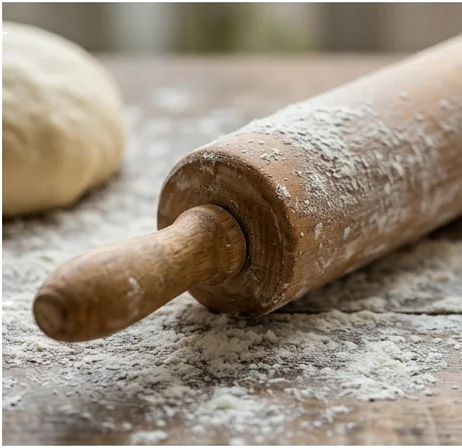
There is a specific kind of quiet that falls over a Polish kitchen when the rolling pin comes out. It is a soft, rhythmic sound—the scrape of wooden board against a floured table, the gentle puff of white dust settling on the counter, and the slow, rhythmic hiss of a boiling pot. If you have ever sat in a kitchen in Kraków during a late-autumn drizzle, or watched the steam rise from a plate in a roadside tavern near Zakopane, you know that pierogi are not merely food. They are a physical manifestation of comfort, history, and family ties folded into neat, crescent-shaped pockets.
For me, the magic of the pieróg lies in its humility. It is a dish born of necessity, created by home cooks who had to stretch modest pantry staples to feed large, hungry households. Over the centuries, these dumplings have traveled from rustic peasant tables to royal banquets, losing none of their soul along the way. Today, they remain Poland’s ultimate culinary calling card—a dish that invites you to slow down, pull up a chair, and listen to the stories folded inside the dough.
The Sacred Art of the Dough
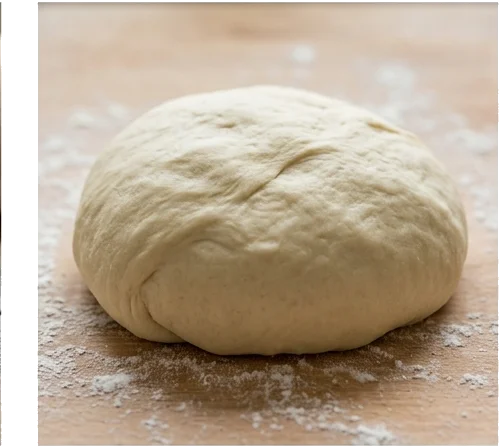
Ask three Polish grandmothers for their dough recipe, and you are likely to spark a lively, hours-long debate. Should the water be boiling or merely warm? Is an egg necessary, or does it make the dough too tough? Does a dollop of sour cream or a splash of vegetable oil guarantee that coveted, pillowy softness?
While the exact ratios are often kept as guarded family secrets, the core philosophy remains the same: the dough must be tender, elastic, and rolled thin enough to cradle the filling without stealing the show. It requires a tactile intuition. You feel the dough change under your palms, shifting from a sticky mass to a smooth, warm sheet that yields to the touch. The cutting is traditionally done with the rim of a simple drinking glass, creating perfect circles ready to be filled, folded, and pinched shut. That pinch—the decorative crimp along the edge—is the maker's signature. Some prefer a simple, clean seal, while others craft an intricate, braided ridge that looks like twisted rope. This dedication to dough-making is comparable to the precision required for a classic French croissant.
A Geography of Fillings: From Forest to Farmhouse
The fillings of Polish pierogi tell the story of the country's landscapes, seasons, and historical shifts. While modern chefs experiment with everything from chocolate to duck confit, the traditional fillings remain the undisputed rulers of the Polish table.
Pierogi Ruskie (Potato and Cheese)
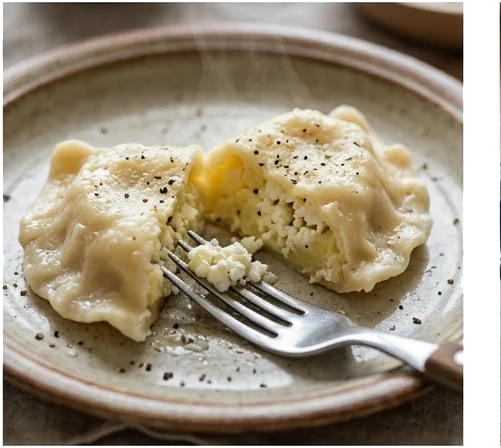
Perhaps the most famous of all, *pierogi ruskie* have a name that is often misunderstood. "Ruskie" does not refer to Russia, but rather to the historical region of Red Ruthenia (Ruś Czerwona), which today encompasses parts of southeastern Poland and western Ukraine. The filling is a masterful exercise in simplicity: boiled potatoes mashed with fresh acid-set curd cheese (*twaróg*) and a generous amount of deeply caramelized onions. The key to a great ruskie is balance. The potatoes must be floury, the twaróg must have a pleasant tang, and the seasoning must be sharp with freshly ground black pepper.
Z Mięsem (The Savory Meat Classic)
Historically, meat pierogi were a clever way to ensure nothing went to waste. The filling is traditionally made from cooked beef, pork, or poultry left over from making *rosół*—the rich, golden Sunday broth. The cooked meat is finely ground, seasoned with sautéed onions, marjoram, garlic, and a splash of the broth to keep it moist and savory. Eating one is a comforting experience, offering a deep, roasted flavor wrapped in soft, yielding dough. These seasonings reflect the historical importance of key herbs and spices in traditional European cooking.
Kapusta i Grzyby (Sauerkraut and Wild Mushrooms)
This combination is the undisputed king of the Polish Christmas Eve supper (*Wigilia*). It is a dish deeply connected to the Polish forest. The mushrooms—ideally wild porcini (*borowiki*) or bay boletes (*podgrzybki*)—are hand-gathered in the autumn, dried to concentrate their earthy aroma, and then rehydrated. They are chopped and simmered with tangy sauerkraut, onions, and black pepper. The result is dark, intensely savory, and wonderfully complex, carrying the scent of damp earth and pine needles. For those who cannot forage them in the wild, these authentic ingredients can often be found at historical European food markets.
Summer Sweetness: Owoce (Fruit Fillings)
When the Polish summer arrives, the savory fillings briefly step aside. Kitchens fill with the scent of fresh berries. *Pierogi z jagodami* (filled with tiny, wild forest bilberries that stain your tongue deep purple) or *pierogi z truskawkami* (sweet summer strawberries) are served warm, drizzled with cold sour cream and a dusting of sugar. It is the taste of childhood summer holidays spent in the countryside. For those with a passion for European desserts, exploring French éclair history offers another fascinating look at sweet traditions. In a similar way, discovering the origins of tiramisu reveals how local European treats can capture global attention.
The Ritual of the Table
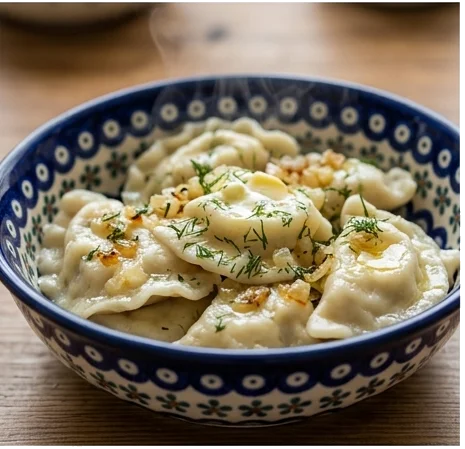
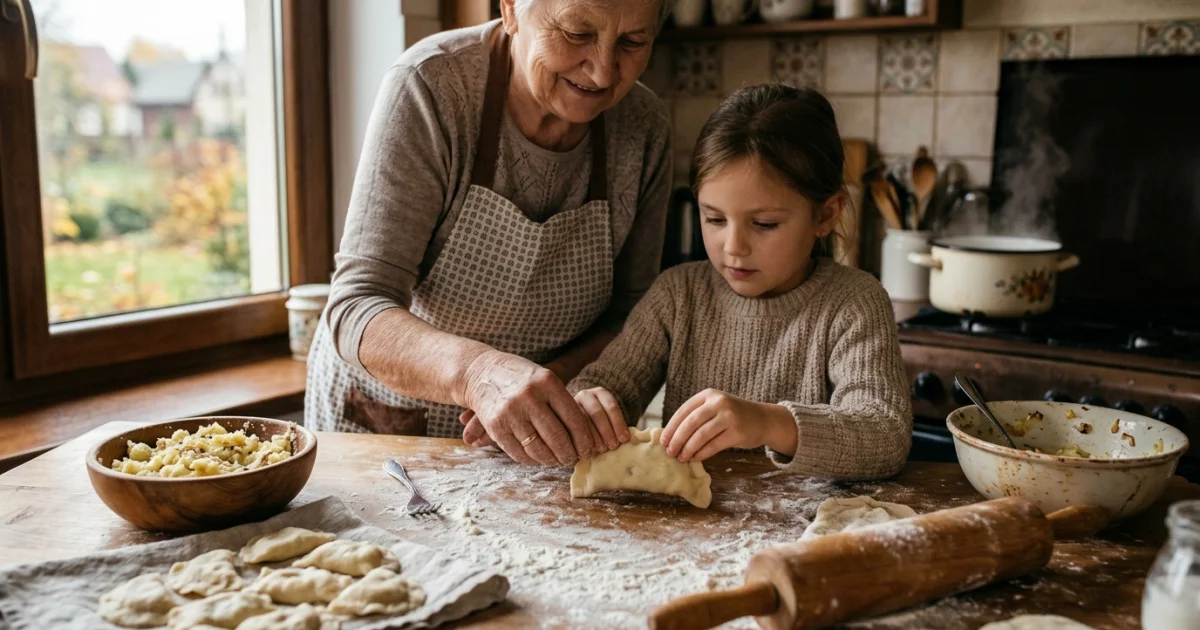
Making pierogi is rarely a solitary endeavor. It is a communal ritual, a culinary assembly line that brings generations together. One person rolls, another cuts and fills, and a third watches the boiling pot, waiting for the dumplings to rise to the surface like pale, plump cushions.
How you dress your pierogi is just as important as how you fill them. Savory varieties are rarely served dry. They are traditionally glistening with melted butter, crowned with *skwarki* (crispy pork cracklings), or smothered in sweet, translucent caramelized onions. A dollop of thick, cold sour cream on the side is highly recommended, providing a cool contrast to the hot, steaming dumplings.
To sit at a Polish table with a steaming platter of hand-pinched pierogi is to experience hospitality in its purest form. It is a dish that demands patience from the cook and appreciation from the eater. In a fast-moving world, the humble pieróg remains a delicious anchor to the past, reminding us that the best things in life are still made by hand, shared with family, and served with a generous pour of melted butter. Once the hearty meal is over, transitioning to sweet desserts and coffee highlights the warmth of traditional after dinner rituals.
Leave a Comment