The Wisdom of the Simmering Pot: How Europe’s Regional Soups Tell the Story of Thrift and Climate
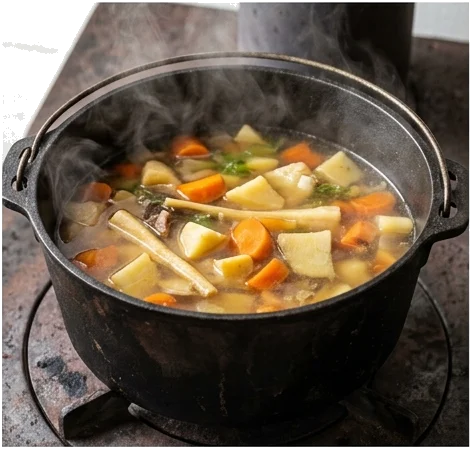
I’ve always believed that you can read a region’s history far more clearly in the steam rising from a soup bowl than in any municipal archive. Walk into a village tavern in Poland on a freezing November afternoon, or duck under the canvas awning of a Parisian bistro while rain slickens the cobblestones, and you’ll find the same fundamental human response to cold, hunger, and scarcity: the slow-simmered pot.
In the culinary history of Europe, soup was never a mere starter; it was a survival strategy. It is the ultimate expression of thrift. Before the days of refrigeration and cheap energy, the hearth fire burned constantly, and the cooking pot was a perpetual motion machine of flavor. Into it went the tough cuts of meat, the withered roots from the cellar, the stale heel of yesterday's sourdough, and the wild herbs plucked from the wayside. What emerged, after hours of gentle bubbling, was nothing short of alchemy. These dishes reflect the climate that forged them, utilizing local ingredients to create comfort out of necessity.
French Onion: From the Mud of Paris Markets to Late-Night Luxury
To understand soupe d'oignon, you have to transport yourself to the mid-19th century, specifically to the iron-and-glass pavilions of Les Halles—the historic, chaotic food market of Paris that Emile Zola famously dubbed "the Belly of Paris." Here, in the damp, freezing pre-dawn hours, porters, butchers, and market-goers sought refuge in dark taverns. They needed something cheap, hot, and incredibly fortifying.
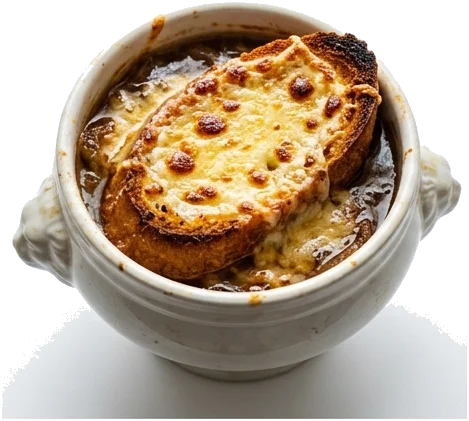
The solution was the onion. Abundant, inexpensive, and easily stored through the winter, onions contain a surprising amount of natural sugar. By slicing them thin and sweating them slowly over low heat for hours, cooks transformed these sharp, tear-inducing bulbs into a sweet, mahogany-colored jam. Deglazed with a splash of dry sherry or white wine, flooded with a rich beef bone broth, and topped with a slice of stale baguette and a generous grating of Gruyère, the soup was placed under a broiler. The result was a bubbling, caramelized crust that sealed in the heat. It was food for the working class that eventually seduced the aristocrats stumbling out of the cabarets at dawn—proving that true culinary genius knows no social boundaries.
Polish Żurek: The Fermented Alchemy of the North
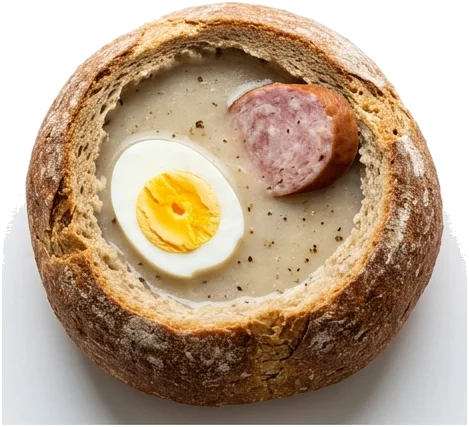
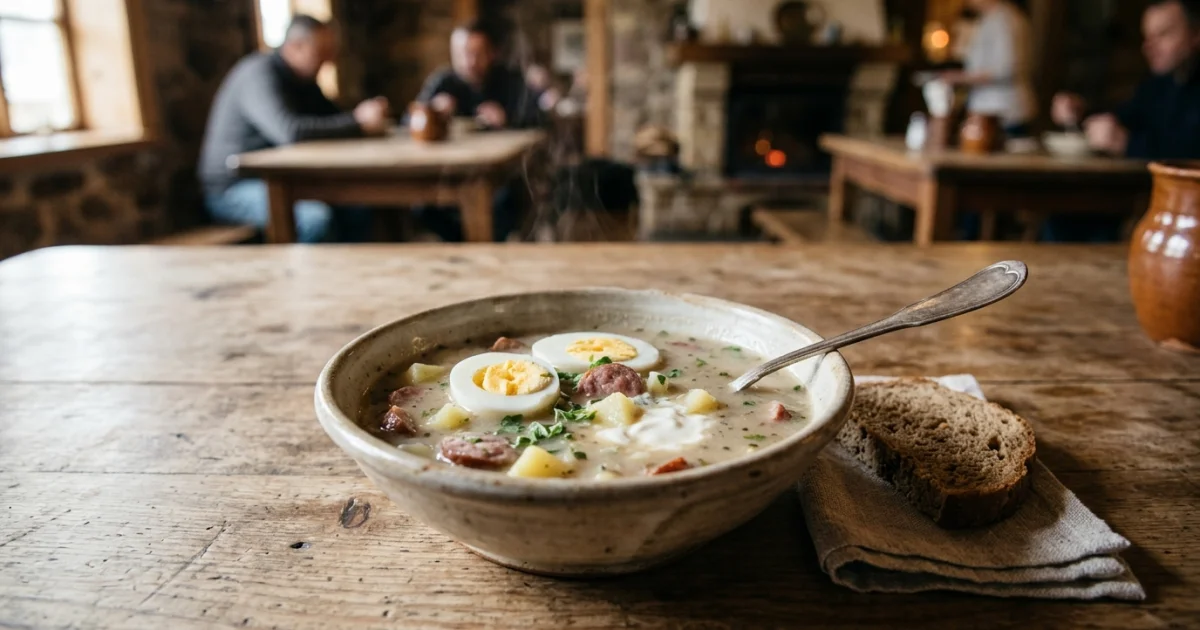
If the French onion soup relies on the slow caramelization of sugars, the Polish żurek is a masterclass in the ancient art of fermentation. I remember the first time I tasted this soup in a small, wood-paneled inn outside of Kraków. The aroma hit me before the bowl even touched the table—a deeply comforting, complex cloud of woodsmoke, wild marjoram, and a distinct, appetite-awakening sourness.
The soul of żurek lies in its starch base, known as zakwas. This is a fermented liquid made by mixing rye flour with water, garlic, and spices, then leaving it to ferment in a warm corner for several days. It is this wild lacto-fermentation that gives the soup its characteristic silky texture and tangy bite. Historically, it was a modest dish eaten during Lent, but over the centuries, it became a celebratory feast, especially at Easter. A proper bowl of żurek is incredibly hearty, loaded with chunks of smoked bacon, boiled Polish sausage (kielbasa), and halved hard-boiled eggs. It is a soup designed to combat the damp, biting chill of the Central European plains, utilizing the preservation powers of fermentation to keep the body warm and satisfied. Such deep-rooted food traditions of Central Europe are also beautifully preserved in the classic apple strudel and its storied culinary heritage.
Italian Minestrone: The Ever-Shifting Canvas of the Garden
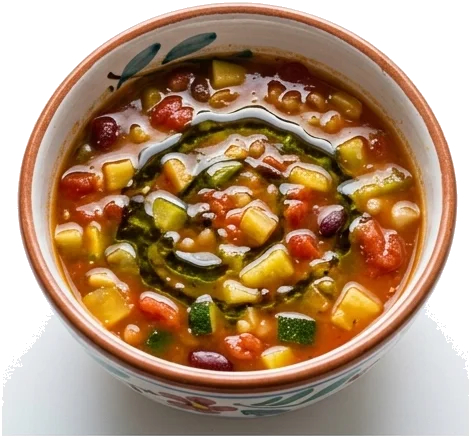
Travel south across the Alps, and the heavy, smoky flavors of the north yield to the bright, vegetable-forward philosophy of the Mediterranean. Minestrone literally translates to "the big soup," and it is perhaps the most democratic, flexible dish in the entire Italian culinary lexicon.
There is no single "authentic" recipe for minestrone, and attempting to write one is a quick way to spark a passionate regional argument. In Genoa, they swirl a spoonful of fresh basil pesto into the bowl just before serving. In Tuscany, they thicken it with white cannellini beans and leftover crusts of unsalted Tuscan bread (a variant known as ribollita). In the south, you might find it spiked with hot peppers and tomatoes. Minestrone is the liquid history of the Italian kitchen garden (l'orto). It is defined by whatever is in season, whatever is leftover, and whatever needs to be used up. It relies on a strong foundation of soffritto—onions, celery, and carrots gently cooked in olive oil—before being built up with seasonal greens, beans, and perhaps a Parmesan rind thrown into the bubbling broth to add depth. It is a daily celebration of local abundance and domestic thrift.
A Culinary Map of European Soups
To help you navigate these regional liquid treasures, I’ve put together a neat reference guide highlighting their origins, core ingredients, and the cultural context that makes each of them so special.
| Soup Name | Region & Country | Key Ingredients | Cultural Significance & Thrift Story |
|---|---|---|---|
| Soupe à l'Oignon | Île-de-France, France | Yellow onions, beef stock, stale baguette, Gruyère cheese. | Originally "the soup of the poor" at Parisian markets; evolved into a legendary late-night hangover cure across all social classes. |
| Żurek | Silesia & Greater Poland, Poland | Fermented rye flour starter (zakwas), kielbasa, smoked bacon, hard-boiled eggs, marjoram. | A celebration of Northern European fermentation; traditionally served at Easter to break the Lenten fast. |
| Minestrone | Multiple regions, Italy | Seasonal vegetables, beans, pasta or rice, olive oil, Parmesan rind. | The absolute embodiment of zero-waste Italian home cooking; changes entirely based on the season and the family garden. |
| Cullen Skink | Moray, Scotland | Smoked haddock, potatoes, onions, milk, butter. | A coastal classic born of the harsh North Sea climate; uses local smoked fish and humble potatoes to create a rich, warming broth without expensive cream. |
| Gazpacho | Andalusia, Spain | Ripe tomatoes, cucumbers, bell peppers, garlic, stale bread, olive oil, sherry vinegar. | A cold, refreshing soup created by Andalusian field laborers to hydrate and nourish themselves during the blistering summer harvest. |
The Art of the Ladle
What all of these dishes share is a rejection of waste. They prove that with time, patience, and a little culinary intuition, the simplest ingredients can be elevated into something sublime. The next time you find yourself with a drawer full of slightly wilted vegetables, some stale bread, or a bone left over from Sunday's roast, don't throw them away. Fill a pot with water, light the flame, and take part in a culinary tradition that has kept Europe warm for centuries.
Leave a Comment