The Smolder of the Bogrács
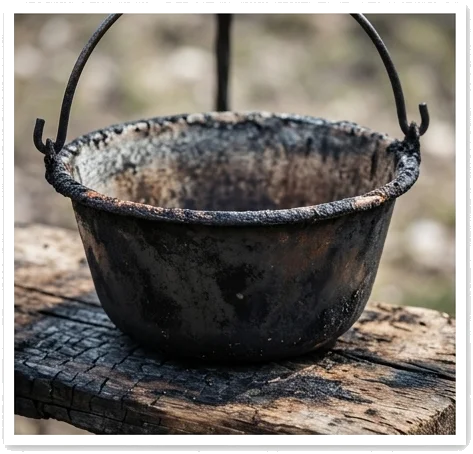
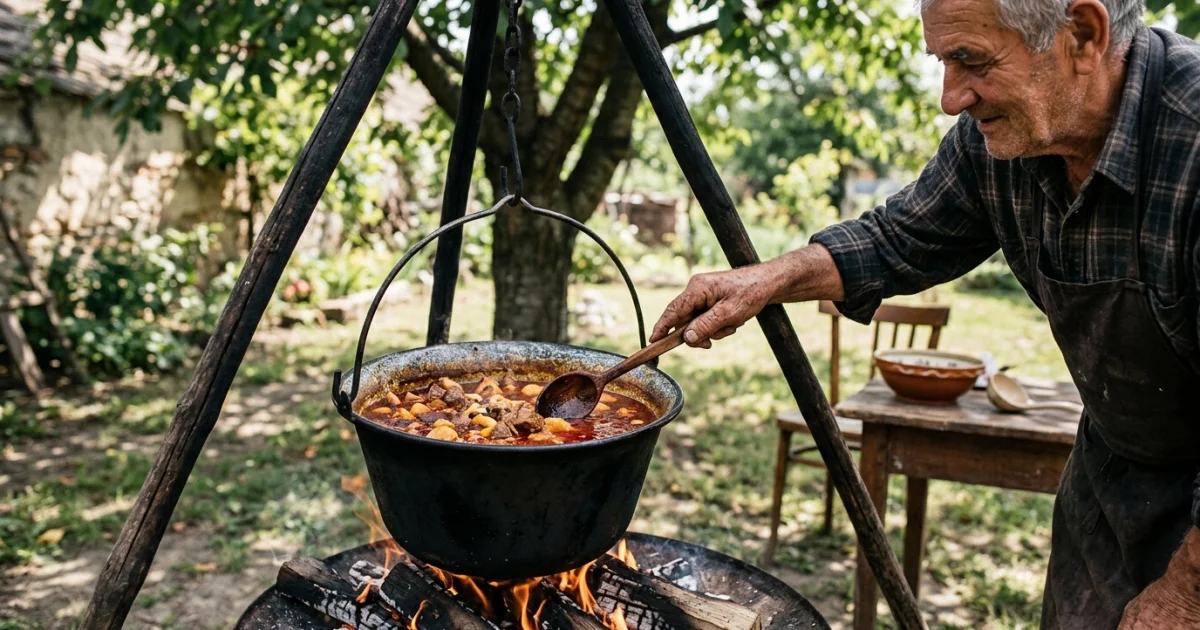
I still remember my first real encounter with a proper Hungarian goulash. It wasn’t in a polished Budapest restaurant with white tablecloths and a violin soloist playing Gypsy airs for tourists. It was in a backyard in the village of Nagykörű, under the shade of a sprawling cherry tree. My host, an elderly gentleman named Imre with hands like cured oak, was tending to a soot-blackened cast-iron kettle hanging from a tripod over an open wood fire. The kettle is called a bogrács, and as the gentle breeze carried the scent of sweet, smoky paprika and melting lard across the yard, Imre muttered something that has stuck with me ever since: "You cannot rush a goulash, Thomas. If you don't have three hours to give it, make something else."
He was right. Goulash is not just a recipe; it is a slow-motion transformation. It is a dish born of the open sky, carrying the history of a nation in its rich, mahogany-red broth. To understand it, we have to look past the modern comfort food we think we know and travel back to the windy pasturelands of the Great Hungarian Plain.
From the Pasture to the Royal Court
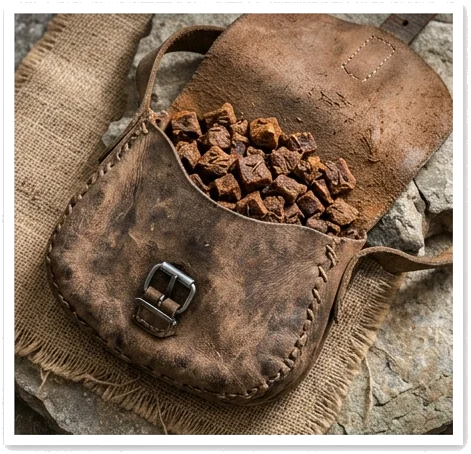
In the ninth century, Hungarian cattle herders—known as gulyás—roamed the vast grasslands of the Alföld. They drove the hardy, long-horned grey cattle across vast distances. For these men, food had to be practical, non-perishable, and cooked in a single pot. They would slow-cook beef with wild onions until the liquid evaporated, then dry the savory mixture in the sun so it could be easily carried in bags made of sheep’s stomachs. On the trail, they simply added water to reconstitute it over a campfire. This was the primordial ancestor of today’s dish.
For centuries, this rustic stew remained the exclusive domain of peasants and shepherds. But in the late 18th century, history intervened. The Habsburg Emperor Joseph II attempted to centralize his empire’s administration, threatening Hungarian language, culture, and autonomy. In response, Hungarian nobles looked for symbols of national identity to assert their distinctiveness. They found it in the language of the peasants, the music of the countryside, and the humble shepherd's kettle.
By the early 19th century, goulash had moved from the campfire to the aristocratic dining rooms of Pest and Vienna. It became a silent, delicious protest against Austrian cultural dominance—a national icon served on fine porcelain. These dining rooms also popularized the classic apple strudel across the empire. These Austrian baking traditions also laid the groundwork for the classic French croissant which evolved from the traditional Viennese Kipferl.
The Holy Trinity: Lard, Onions, and Paprika
The magic of a true goulash lies in its stark simplicity. It does not rely on a complex array of herbs or artificial thickeners. Instead, it relies on a chemical synergy between three foundational ingredients: pork lard, yellow onions, and high-quality Hungarian paprika.
The Onion Base: Patience is a Virtue
You cannot make a proper goulash with oil. It demands rendered pork fat, which provides a deep, savory baseline. In this lard, a mountain of finely chopped yellow onions is cooked. We are not just sweating them, nor are we browning them quickly. The goal is to cook them so slowly that they completely break down, melting into a sweet, jam-like paste. This paste is what gives the final broth its rich body.
The Paprika Rules
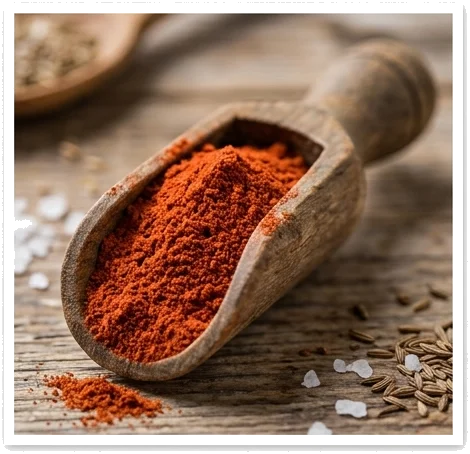
Then comes the paprika. It is crucial to use authentic Hungarian sweet paprika (often labeled Édesnemes). This is not the smoky Spanish pimentón, nor is it the generic, tasteless red dust found in supermarket spice jars. It should smell of warm earth and sun-ripened pods.
The most critical step in the entire cooking process happens when the paprika meets the fat. Capsaicin—the compound that gives pepper its flavor and heat—is fat-soluble. To release its full potential, the paprika must be stirred into the hot lard and onions off the heat. If you leave the pot directly over the flame, the high sugar content in the paprika will burn instantly, turning the entire dish bitter and ruined.
Soup or Stew? Clearing up the Great Goulash Confusion
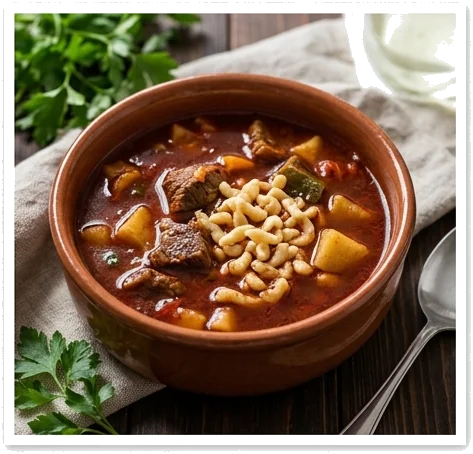
If you order "goulash" in Munich, London, or New York, you will likely be served a thick, gravy-heavy beef stew, perhaps served over egg noodles or mashed potatoes. But if you order gulyás in Hungary, you will receive a soup—specifically, gulyásleves.
To understand Hungarian cuisine, we must understand the linguistic and culinary divide between three related but distinct dishes:
- Gulyásleves: A rich, paprika-scented soup loaded with tender beef cubes, root vegetables (carrots and parsnips), and small, pinched egg noodles called csipetke. It is eaten with a spoon and accompanied by thick slices of fresh white bread.
- Pörkölt: This is what the rest of the world usually calls "goulash." It is a thick, concentrated meat stew with a heavy, onion-rich gravy, containing no vegetables other than a bit of fresh pepper and tomato cooked down into the sauce. It is served over noodles (nokedli).
- Paprikás: Similar to pörkölt, but finished with a generous swirl of sour cream (tejföl) stirred into the sauce at the end, usually made with lighter meats like chicken or veal.
When searching for the soul of the shepherd's kettle, it is the soup—the gulyásleves—that holds the crown.
Where We Go Wrong: Common Goulash Pitfalls
Over the years of writing about European regional cuisines, I have seen home cooks commit several culinary sins in the name of goulash. If you want to honor the tradition of the bogrács, avoid these common mistakes:
- Rushing the Simmer: Goulash requires tough, collagen-rich cuts of beef, like chuck, shank, or shoulder. These cuts need at least two hours of gentle, barely-bubbling simmer to allow the tough connective tissues to melt into gelatin, rendering the beef spoon-tender.
- Using Flour or Cornstarch: A true Hungarian goulash is never thickened with starch. The velvety body of the broth comes entirely from the gelatin released by the slow-cooked beef and the dissolved, melted onions. If your goulash looks watery, you didn't use enough onions, or you didn't let them cook down properly.
- Boiling the Meat: The heat should be low and steady. A hard boil will tighten the muscle fibers of the beef, making them dry and stringy rather than melt-in-your-mouth tender.
- Over-spicing: Resist the temptation to add garlic powder, cumin, oregano, or store-bought beef broth cubes. Trust the purity of the beef, the sweet onions, a pinch of caraway seeds, a fresh tomato, and the paprika. Let the ingredients speak for themselves.
As I sat in Imre’s garden years ago, watching the embers of the cherry wood die down, I took my first spoonful of the deep red soup. It was incredibly simple, yet wonderfully complex—sweet, savory, warming, and deeply satisfying. It tasted of patience, of the wind on the plains, and of a culinary tradition kept alive not by cookbooks, but by the steady, quiet rhythm of a simmering pot.
Leave a Comment