My name is Thomas Redford, and I write for TheClocheHat. I’ve always loved European food, especially the kind that carries history inside it. Beyond sweet pastries, I also enjoy exploring classic European soups that have warmed tables and comforted families for centuries.
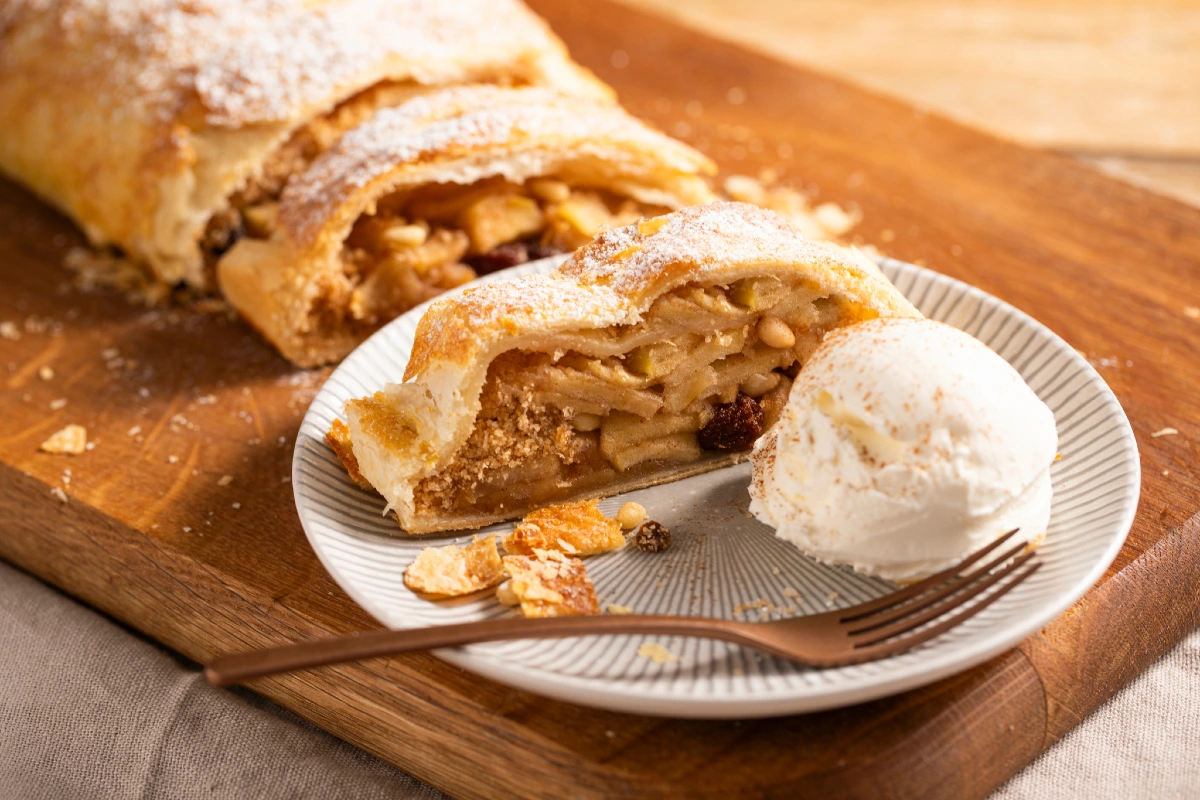
Apple strudel is one of those dishes.
At first glance, it seems simple. Pastry. Apples. Sugar. Spice.
But that’s never really the full story.
Strudel is one of those recipes that moved with people, shifted with borders, and kept changing as it went. That’s part of what makes it so interesting. It feels elegant, yes. But it also feels lived-in. Like something that belonged in both palace kitchens and family homes.
Origins
The apple strudel most people know today is closely tied to the old Habsburg lands, especially Vienna, where it became famous in the 18th century.
But its story starts earlier than that.
The real clue is the pastry.
That paper-thin, stretched dough did not just appear out of nowhere. Most food historians connect it to techniques that came into Central Europe from the Middle East. Baklava is usually part of that conversation. Ottoman influence moved through trade, conflict, and cultural exchange, and local bakers adapted what they saw.
Then the local ingredients took over.
Apples were easy to find. Cinnamon made sense. Raisins joined in. And little by little, Apfelstrudel became its own thing.
So in a way, strudel feels a bit like Europe itself. Layers from different places, folded into one familiar shape.
Key historical points
- 17th and 18th centuries: pastry methods influenced by the Ottoman world reached Central Europe
- 18th and 19th centuries: strudel became a fixture in Viennese cafés
- 19th century onward: recipes spread across the Austro-Hungarian Empire and beyond
How strudel moved across Europe
One thing I love about strudel is that it never stayed still.
It traveled the way people travel. Through migration. Through trade. Through changing borders. Through families carrying recipes from one place to another.
And every region adjusted it a little.
- In Hungary and the Czech lands, bakers leaned into local apples and warm spices.
- In Poland and parts of the Balkans, poppy seeds and nuts often found their way into the filling.
- In South Tyrol and northern Italy, strudel began to overlap with local tart traditions and, sometimes, puff pastry.
- In Germany and Switzerland, it became a café and home-baking favorite, the kind of pastry people brought out for guests.
The details changed. The spirit didn’t.
That spirit is easy to recognize: thin pastry wrapped around a fragrant filling, baked until golden, then served with the kind of pride that says, “Yes, I made this.”
How the recipe changed over time
Strudel was not always sweet.
That surprises people sometimes.
Earlier versions included savory fillings too. Meat. Vegetables. More practical, everyday combinations.
Over time, though, sweet versions took over, especially in cafés. Apple became the star.
That shift makes sense when you think about it.
Café culture grew. City life changed. People wanted desserts that looked generous without being too expensive. Strudel fit the moment perfectly.
It was dramatic when sliced. It paired well with coffee. It smelled wonderful. And it could feed more than one person without much fuss.
Modern versions keep evolving.
Some people use shop-bought phyllo or puff pastry. Some add chopped nuts, vanilla cream, or even custard. Some make tiny party strudels. Others go the opposite way and insist on the old stretched dough, because for them that’s the whole point.
Honestly, I understand both sides.
Traditional Apfelstrudel recipe I trust
This is the version I come back to most often.
It stays close to Viennese tradition, but it’s still realistic for a home kitchen. No dramatic pastry-school energy required.
Ingredients
- 250 g all-purpose flour
- 1/2 tsp salt
- 1 tbsp neutral oil
- 120 to 140 ml lukewarm water
- 30 g unsalted butter, melted, for brushing
- 1 kg tart apples, peeled and thinly sliced
- 100 g granulated sugar
- 50 g raisins, soaked and drained
- 50 g breadcrumbs, toasted in 30 g butter
- 1 tsp ground cinnamon
- zest and juice of 1 lemon
- powdered sugar, optional
Method
- Mix the flour and salt. Add the oil and water, then knead until the dough feels smooth and elastic. This usually takes about 8 to 10 minutes.
- Lightly oil the dough, cover it, and let it rest for 1 hour at room temperature.
- Meanwhile, toss the sliced apples with sugar, lemon juice, lemon zest, cinnamon, and raisins.
- Roll the dough out thinly on a floured cloth, then stretch it gently with your hands until it becomes almost translucent.
- Scatter the toasted breadcrumbs over the center of the dough. This helps catch the juices.
- Spread the apple filling over the breadcrumbs.
- Fold in the short edges, then use the cloth to help roll the strudel gently into shape.
- Place it seam-side down on a baking sheet and brush with melted butter.
- Bake at 180°C for 35 to 45 minutes, until golden and crisp.
- Let it rest for 10 to 15 minutes before serving. Dust with powdered sugar if you like.
I like it warm, with whipped cream or vanilla sauce on the side.
Cold the next day is also excellent, though I rarely have that problem.
How to get that really thin pastry
This is the part people worry about most.
The truth? It takes patience more than talent.
Strudel dough can feel intimidating the first time. But once you understand the rhythm of it, it becomes much less scary.
A bit like learning to roll fresh pasta. Awkward at first. Then suddenly quite logical.
- Let the dough rest properly. This matters more than people think. Resting relaxes the gluten and makes stretching possible.
- Use a large tea towel. It makes rolling and lifting much easier.
- Stretch with the backs of your hands. Fingertips tend to poke holes. The backs of your hands give gentler support.
- Flour lightly, not heavily. Too much flour dries the dough out.
- Brush with melted butter. It helps with flavor and crispness.
- If it tears, don’t panic. Patch it. Once rolled, small repairs usually disappear.
That last one is worth remembering.
Strudel dough looks fragile, but it’s more forgiving than it seems.
A small memory from Vienna
I still remember watching an older baker in Vienna stretch a sheet of dough across a table.
It got thinner and thinner until it was almost unbelievable. You really could have read through it.
I must have looked stunned, because he smiled and said just three words:
“Patience and calm.”
That stayed with me.
And honestly, it applies to more than strudel.
Final tips
If you want better strudel, a few small things make a big difference:
- Use tart apples. They hold their shape better and keep the filling from turning flat and sugary.
- Toast the breadcrumbs. They absorb juices and stop the pastry from going soggy.
- Don’t rush the dough. Most pastry problems begin with impatience.
- If you’re short on time, good-quality phyllo is completely respectable.
But if you get the chance, try the stretched dough at least once.
Even if it’s imperfect. Even if the shape comes out a little uneven.
Because making it by hand teaches you what strudel really is.
And that feels different from simply baking it.
For more food stories and recipes from my travels through Europe’s kitchens, visit TheClocheHat.
Make the strudel. Share it with people. Let the pastry do what it has always done - bring everyone to the table.
Leave a Comment