Hi, I’m Thomas Redford. I write over at theclochehat.com, where I spend an unreasonable amount of time thinking about European food. Whether exploring Italian classics or the legacy of traditional Polish pierogi, I love uncovering culinary traditions.
And tiramisu… well, that one has always had a special place for me.
It’s creamy. Slightly bitter from the coffee. Soft like a cloud. The kind of dessert that makes people pause after the first spoon.
I’ve actually chased its story across northern Italy. Small cafés. Old bakeries. Long chats with pastry chefs who guard their recipes like family secrets.
Some swear it started in Treviso. Others laugh and say, “No one really knows.”
So in this article I’ll walk you through a few things:
- where tiramisu might have come from
- why the origin story is still debated
- how it became famous worldwide
- and how you can make a beautiful version at home
Simple ingredients. A bit of patience. And suddenly… you’ve got one of Italy’s most loved desserts.
What is tiramisu?
At its heart, tiramisu is very simple.
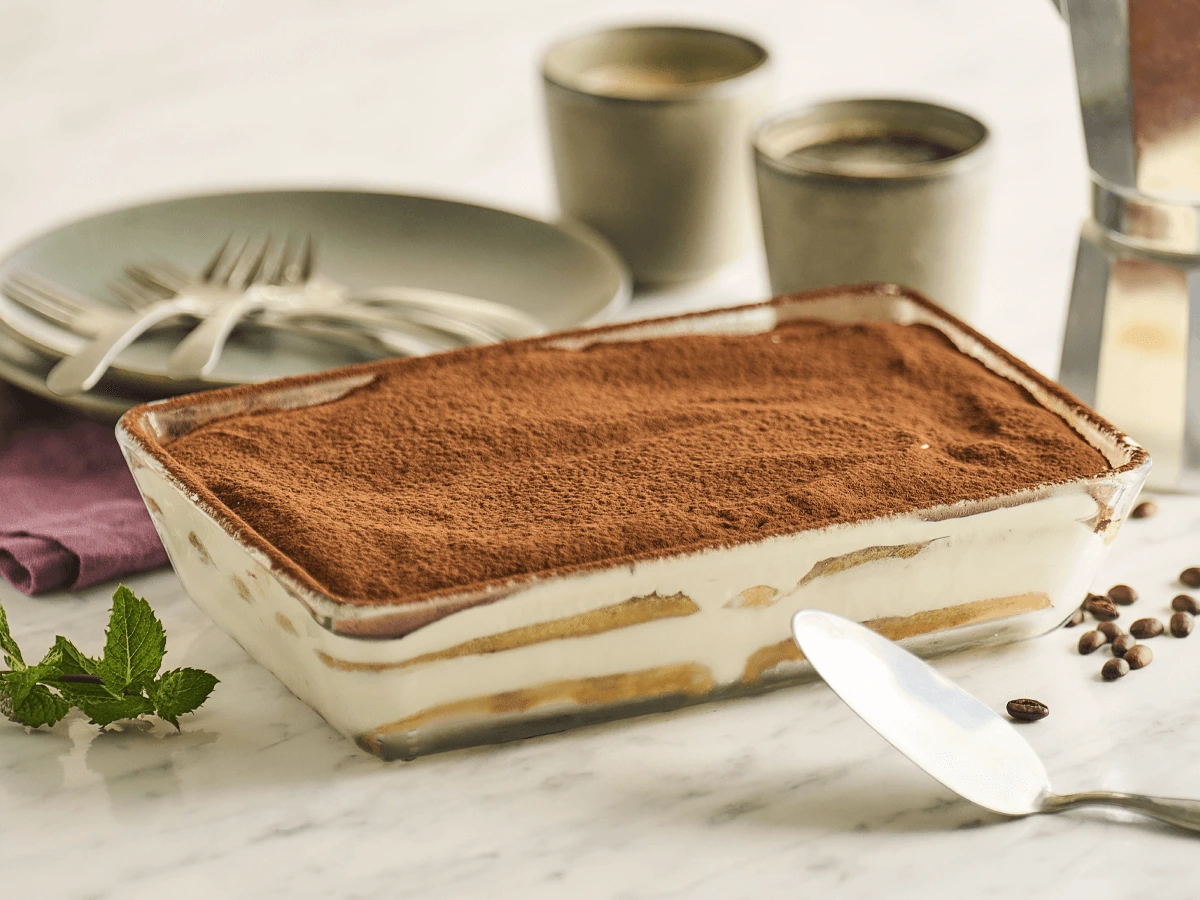
It’s a layered dessert made from:
- coffee-soaked sponge fingers
- mascarpone cream
- eggs and sugar
- a dusting of cocoa
That’s it.
No baking. No complicated techniques. Just layers.
The name tiramisu literally means “pick me up” in Italian. And it makes sense. Between the espresso and sometimes a splash of liqueur… the dessert has a gentle lift.
Not in an energetic way. More like the feeling you get after a great coffee.
Warm. Awake. Happy.
Competing origin stories
If you ask where tiramisu was invented, you’ll quickly notice something funny.
No one agrees.
Several towns claim it. Different chefs tell different stories. Food historians still argue about the details.
So let’s walk through the main theories.
1. The Treviso restaurant story
This is probably the most famous version.
The story places tiramisu in Treviso, in the Veneto region of Italy, sometime in the 1960s or 1970s.
According to locals, a chef at a small restaurant created the dessert as something light and comforting. A sweet finish after dinner.
The ingredients also fit the region:
- espresso was everywhere
- sponge biscuits were common
- mascarpone was widely used
Because of that, many people consider Treviso the most believable origin.
Still… the evidence isn’t perfect.
2. Noble courts and older desserts
Some historians look even further back.
Long before tiramisu, Europe already had layered desserts.
Think of dishes like:
- zuppa inglese
- English trifle
- cream-and-cake puddings
These desserts used similar ideas. Layers of cake. Cream. Syrups.
So one theory says tiramisu didn’t suddenly appear in one kitchen.
Instead, it slowly evolved from earlier desserts.
3. Folk desserts across northern Italy
Another clue comes from home cooking.
Across northern Italy, families often made small puddings with leftover sponge cake, coffee, and cream.
Nothing fancy. Just practical kitchen thinking.
Some dialects even used the phrase “tirame su” to describe energising foods.
So the modern tiramisu may simply be a polished version of something families were already making.
4. Why the truth is still unclear
Food historians rely heavily on written recipes.
And here’s the problem.
Tiramisu barely appears in print before the mid-20th century.
Many early recipes were passed down orally. Restaurants kept their versions private.
By the time the dessert appeared in cookbooks… several variations already existed.
So the safest conclusion is this:
Tiramisu likely grew from a regional tradition rather than a single moment of invention.
How tiramisu became a global hit
The real explosion happened in the late 20th century.
Italian restaurants began spreading around the world in the 1970s and 80s.
Pasta. Pizza. Espresso.
And soon after… tiramisu.
Restaurants loved it because:
- it could be made in large trays
- it kept well in the fridge
- and customers instantly loved the flavor
Food magazines started featuring it. TV chefs demonstrated it. Suddenly home cooks wanted to try it too.
And because the structure is simple, chefs began experimenting.
Today you’ll find versions like:
- matcha tiramisu in Japan
- mango tiramisu in tropical regions
- chocolate tiramisu in pastry shops everywhere
Same idea. Different twist.
Classic tiramisu recipe — the version I trust
I’ve tested many recipes over the years. Some are too heavy. Others turn soggy.
This version works consistently in my kitchen.
It’s classic. Balanced. Hard to mess up.
Ingredients
- 6 egg yolks
- 150 g caster sugar
- 500 g mascarpone
- 300 ml strong espresso
- 60–90 ml coffee liqueur (optional)
- 300–350 g sponge fingers (savoiardi)
- cocoa powder
- a pinch of sea salt
- optional dark chocolate shavings
Method
- First, brew strong espresso and let it cool.
- Whisk egg yolks and sugar in a bowl over simmering water. Keep whisking until thick and pale.
- Remove from heat and let it cool slightly.
- Fold in mascarpone gently until smooth.
- Quickly dip each sponge finger into the coffee for about one second.
- Lay them in a dish to form the first layer.
- Spread half the cream mixture on top.
- Repeat the layers once more.
- Cover and chill at least four hours.
Right before serving, dust the top with cocoa.
That moment — the cocoa falling like soft snow — always feels satisfying.
Portions and timing
This recipe feeds about 6 to 8 people.
And honestly, it tastes better the next day. The flavors settle. The texture firms up.
Simple tips that make tiramisu better
After making this dessert dozens of times, a few small tricks really help.
- Use strong coffee. Weak coffee makes the dessert dull.
- Dip biscuits quickly — one second is enough.
- Fold mascarpone gently to keep the cream airy.
- Let the dessert chill overnight if possible.
- Dust cocoa right before serving.
Think of tiramisu like lasagna.
The layers need time to settle.
Regional variations and modern twists
One thing I love about tiramisu is how adaptable it is.
The structure stays the same. The flavors can change.
Italian regional touches
- Veneto style: often includes Marsala wine.
- Sicilian versions: sometimes add citrus zest.
- Central Italy: lighter cream with whipped cream.
Modern variations
- Matcha tiramisu
- Chocolate tiramisu
- Strawberry tiramisu
- Mango tiramisu
- Alcohol-free family versions
- Vegan adaptations using aquafaba
Some are traditional. Some are experimental.
But the structure still works.
A small memory from Treviso
One of my favourite food memories happened in Treviso.
I stopped at a tiny café. Nothing fancy. Just a quiet place with a few tables by the window.
An older pastry chef sat nearby.
When I asked about tiramisu, he smiled and shrugged.
“People argue about who invented it,” he said. “But we just made it after long days. Coffee. Cheese. Sugar. Something comforting.”
He never mentioned dates. Or famous chefs.
Just the feeling.
And honestly… that explanation felt more believable than any official story.
Common mistakes
Tiramisu is simple, but a few mistakes show up often.
- Soggy layers — caused by soaking biscuits too long.
- Watery cream — from overmixing.
- Flat flavor — from weak coffee.
- Curdled mascarpone — from over-whisking.
The fix is simple.
Work gently. Use good ingredients.
Why tiramisu still matters
Some desserts fade over time.
Tiramisu never really did.
Maybe because it balances so many things:
- coffee bitterness
- sweet cream
- soft sponge
- a touch of cocoa
Four simple elements.
Together they create something memorable.
That’s why you’ll see tiramisu everywhere — from family kitchens to high-end restaurants.
Final thoughts
I make tiramisu often for friends.
Some prefer it with Marsala. Others want a lighter, alcohol-free version.
My rule is simple.
Taste the cream before assembling.
If the coffee and mascarpone balance feels right in the bowl… it will taste right on the plate.
If you enjoy stories like this, you’ll find more over at theclochehat.com.
European food has endless stories. The iconic Lisbon custard tart is a beautiful example of how simple ingredients create timeless desserts.
And tiramisu is only one of them.
Leave a Comment