The Architecture of Comfort: Decoding the Greek Moussaka
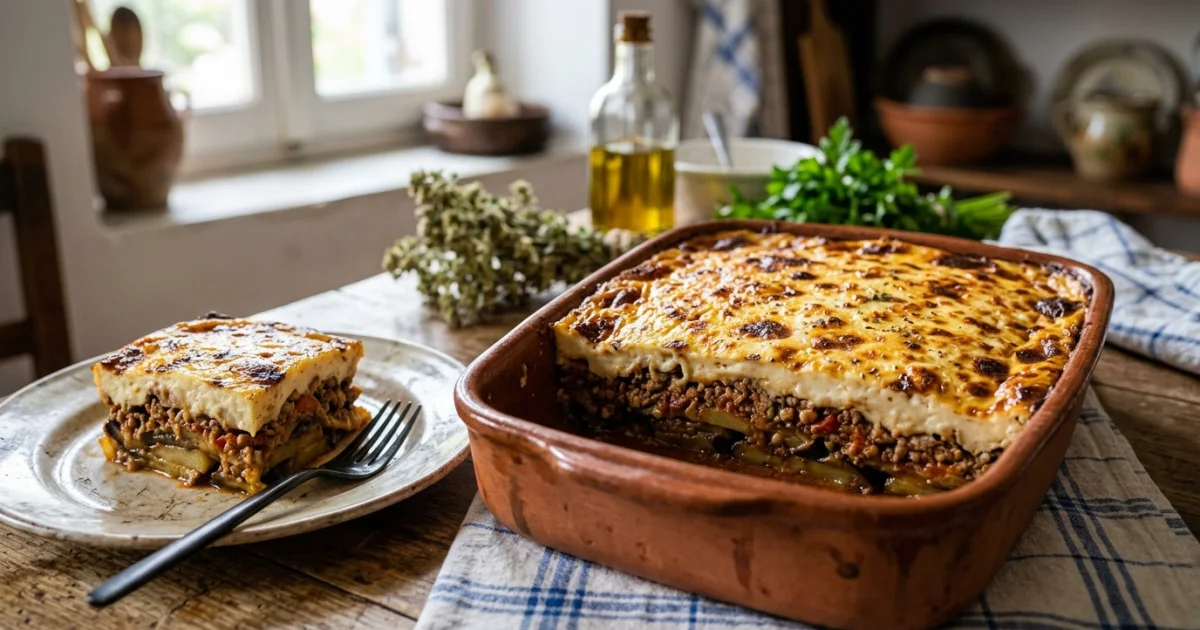
There is a specific kind of quiet that settles over a kitchen when a moussaka is in the oven. It is not the rapid, high-heat drama of a stir-fry or the precision of a soufflé. It is a slow, heavy, aromatic steam that slowly fills the room, carrying with it the unmistakable scent of sweet cinnamon, roasting eggplant, and scorched cheese. To bake a moussaka is to commit to an afternoon. It is a labor of love that cannot be rushed, a dish that demands you slow down and respect the process of layering flavor upon flavor.
Whenever I find myself in Greece, steering clear of the tourist-heavy waterfronts to find those tucked-away tavernas where the grandmothers still rule the kitchen, I look for the moussaka. I look for the version served warm, never scalding hot, cut into a neat, self-supporting square. It is a dish that tells the story of migration, culinary translation, and the eternal search for comfort at the bottom of a baking dish. This deep culinary connection and traditional way of eating is also best observed when exploring lively European food markets.
The Anatomy of the Layers
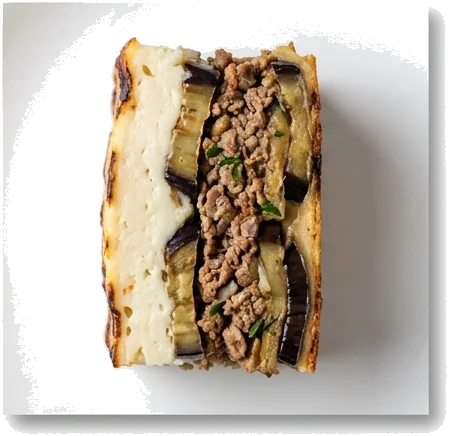
A great moussaka is a masterclass in culinary architecture. Each layer must perform its duty perfectly, contributing to a harmonious whole that is rich but never greasy, spiced but not fiery.
- The Foundation: The Roasted Eggplant. The purple-skinned aubergine is the soul of the dish. Traditionalists will tell you that the eggplant must be sliced, salted, left to weep its bitter juices on a kitchen towel, and then fried in copious amounts of olive oil. While delicious, this can sometimes make the final dish heavy. In my own kitchen, I prefer brushing the slices generously with a good regional olive oil and roasting them in a hot oven until they are collapsed, sweet, and slightly charred at the edges. Sometimes, a thin layer of parboiled potato slices sits at the very bottom to act as a structural sponge, but it is the eggplant that carries the weight.
- The Heart: The Spiced Meat Sauce. This is where the Ottoman heritage of the dish truly whispers. Whether you use ground lamb, beef, or a mixture of both, the magic lies in the aromatics. This is not an Italian bolognese; it is a warm, deeply fragrant ragu. It requires a generous hand with onions and garlic, a splash of dry red wine, and the essential trio of cinnamon, cloves, and allspice. The sauce must be simmered slowly until it is thick and dry—any excess moisture will ruin the structural integrity of the baked dish. These aromatic elements are closely tied to the history of important European spices.
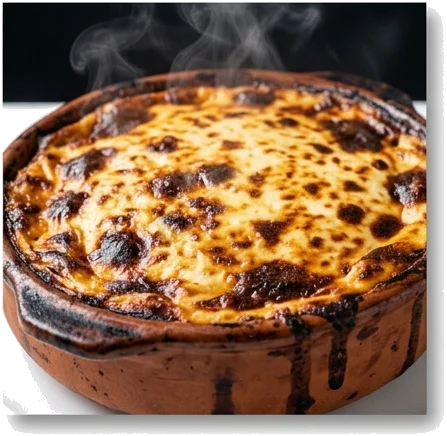
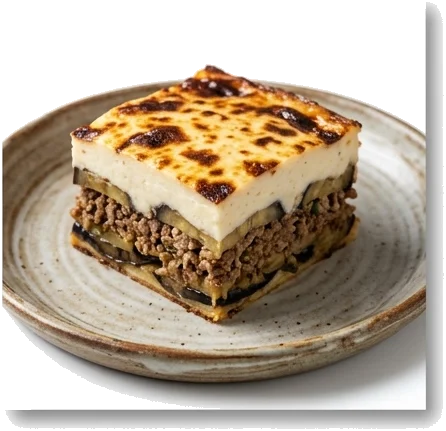
- The Crown: The Rich Béchamel. The top layer is a velvet blanket of egg-enriched béchamel sauce, spiced with a grating of fresh nutmeg and a handful of salty, sharp cheese like Kefalotyri or Pecorino. As it bakes, the eggs in the sauce cause it to puff up like a custard, creating a beautiful, golden-brown crust speckled with dark spots.
A Crossroads of Empires: The History Behind the Dish
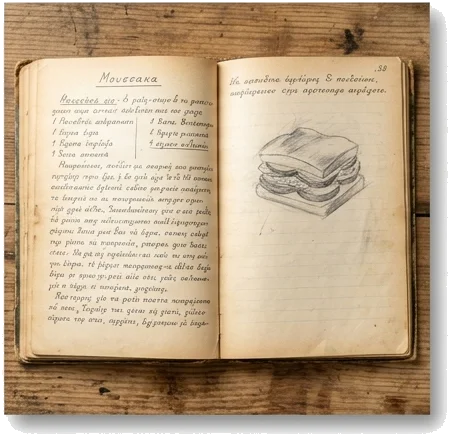
To understand the moussaka we know today, we have to travel back through the layers of Balkan and Ottoman history. The word itself, musaqqa‘ah, comes from the Arabic meaning "chilled" or "moistened," and across the Middle East and the Levant, versions of moussaka exist as cold, olive-oil-drenched stews of eggplant and tomatoes, entirely devoid of meat or dairy.
How, then, did the Greek version become this decadent, baked, French-influenced masterpiece? The answer lies in the early 20th century with a chef named Nikolaos Tselementes. Born on the island of Sifnos and trained in Vienna and France, Tselementes was on a mission to "purify" Greek cuisine from what he saw as heavy Turkish and Ottoman influences. He wanted to Europeanize the Greek palate. These two regions are also famous for their sweet batter traditions, including various styles of European thin pancakes.
In the 1920s, Tselementes took the existing, rustic eggplant and meat dish and crowned it with a classic French béchamel. By adding this layer of buttery, milky luxury, he transformed a simple regional casserole into a national monument of Greek gastronomy. It is a fascinating historical irony: the dish most people associate with ancient Greek tradition is actually a relatively modern, French-inspired creation of a cosmopolitan chef.
The Sacred Law of the Cooling Counter
The most difficult part of making a moussaka is not the peeling, the frying, or the whisking of the sauce. It is the waiting.
When the moussaka emerges from the oven, bubbling furiously at the edges with a top layer that has puffed up like a golden pillow, the temptation to slice into it immediately is almost overwhelming. But you must resist. If you cut into a hot moussaka, the layers will slide away from each other, the béchamel will run, and you will end up with a delicious but chaotic soup on your plate.
A moussaka needs to rest on the counter for at least thirty to forty-five minutes. As it cools, the custard-like béchamel sets, the juices from the meat sauce are reabsorbed by the eggplant, and the flavors marry and deepen. It is during this quiet cooling period that the dish transforms from a collection of hot ingredients into a unified, sliceable comfort food. It should be served warm, or even at room temperature, accompanied by a simple, crisp Greek salad and a glass of dry, resinous Assyrtiko wine. Only then can you truly appreciate the patience that went into every single layer.
Leave a Comment