

If you have ever sat under the woven reed canopies of a seaside taverna in Piraeus or a village square in Naxos, you know the unmistakable presence of real Greek tzatziki. It arrives in a heavy earthenware dish, cool to the touch, crowned with a single wrinkled Kalamata olive and a pool of peppery, emerald-green olive oil. It is so dense that a fork stands upright in the center without wavering. It tastes cooling, clean, and aggressively savory—a world away from the pale, watery, soupy tubs masquerading under the same name on supermarket shelves.
Achieving that dense, spoonable taverna texture at home is not a matter of luck or mystical Mediterranean air. It comes down to two unyielding physical principles: ruthless moisture extraction from your cucumbers and the non-negotiable use of high-fat, truly strained yogurt. Once you master the mechanics of dairy fat and osmotic dehydration, you will never endure a soggy, weeping tzatziki again.
The Core Mechanics of Ultra-Thick Tzatziki
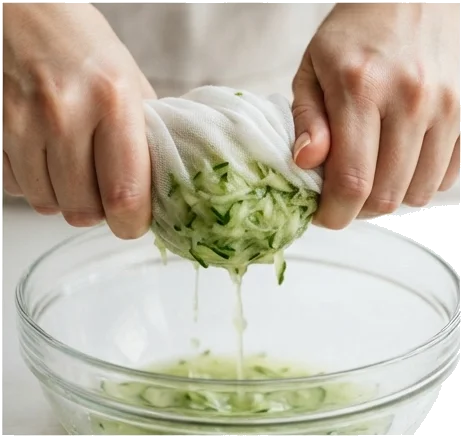
The primary enemy of a glorious tzatziki is water. Cucumbers consist of roughly 96% water bound within fragile plant cell walls. The moment you introduce salt to an un-drained cucumber, osmosis begins: water floods out of the cellular matrix into the surrounding environment. If that environment is your yogurt base, you will have a pristine dip for twenty minutes, followed by a separated, runny sludge by dinner time.
The second pillar is fat. In Greek culinary tradition, tzatziki is an emulsion of dairy, oil, and aromatics. Authentic strained yogurt relies on a minimum of 10% milk fat. Dietary fat is not merely an indulgence here; it serves a precise mechanical purpose. Lipids coat the tongue and carry the volatile, sulfurous allicin compounds released by crushed raw garlic, rounding off their harsh, burning edges into a mellow, savory warmth. Furthermore, dairy fat provides structural viscosity. Low-fat substitutes lack the dense protein-lipid mesh required to trap the cucumber shreds, causing the dip to collapse under its own weight.
Selecting the Right Yogurt: Straggisto vs. Regular Greek Yogurt
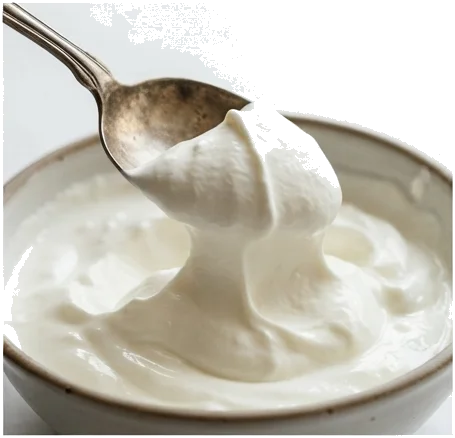
In Greece, the gold standard is straggisto (strained yogurt), traditionally made from sheep’s milk or rich cow’s milk, where the whey has been drawn off through woven cloth bags until what remains resembles soft, spreadable cheese. For the most authentic result, seek out full-fat whole milk Greek strained yogurt with at least 10% fat content (brands like FAGE Total 10% are widely available and perform exceptionally well).
Explicitly steer clear of anything labeled "Greek-style" yogurt, low-fat (2%), or non-fat (0%) options. These products frequently rely on gelatin, pectin, or milk protein concentrates to simulate thickness, yet they weep moisture the second they meet salt and acid, turning chalky and thin.
If you cannot find an imported 10% Greek strained yogurt and are working with looser whole-milk yogurt, you must pre-strain it yourself:
- Line a fine-mesh sieve with a clean double layer of cheesecloth or an unbleached coffee filter.
- Set the sieve over a deep bowl, add 500 g (approx. 2 cups) of whole-milk yogurt, and place it in the refrigerator for 2 hours.
- Discard the watery yellowish whey that collects in the bowl. What remains in the cloth will be dense, glossy, and taverna-ready.
The Triple-Action Cucumber Prep Method
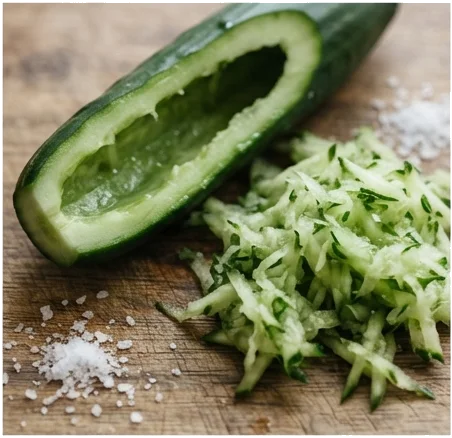
To eliminate cucumber weepage entirely, do not simply squeeze grated cucumber between your palms for five seconds. Employ this triple-action extraction protocol to remove every micro-drop of excess water:
- Deseed and Grate: If using thick-skinned standard cucumbers, peel them and scrape out the wet, seed-filled core using a melon baller or teaspoon. If using thin-skinned English or Persian seedless cucumbers, leave the skin on for color and bite. Coarsely grate the cucumber on the large teardrop holes of a sturdy box grater. Never grate finely, or you will produce an unworkable pulp.
- Osmotic Extraction: Place the grated cucumber into a colander, toss it evenly with 1/2 teaspoon (3 g) of fine sea salt, and let it rest over a bowl for 20 minutes. The salt draws the intracellular water outward through the ruptured cell walls via osmosis.
- Mechanical Wringing: Transfer the salted cucumber into the center of a clean linen tea towel or heavy muslin cloth. Gather the four corners together, twist tightly to form a pouch, and wring the cloth forcefully over the sink. Twist until your knuckles whiten. Keep wringing until zero drops emerge and the cucumber inside feels completely dry, compacted, and pliable to the touch.
Essential Ingredients and Authentic Additions
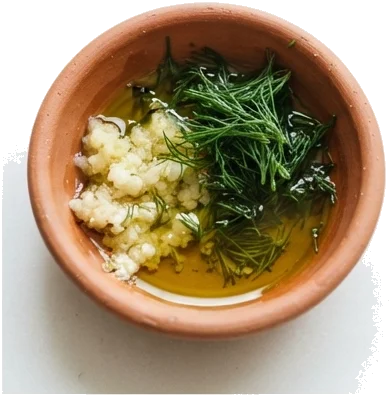
True Greek cooking is defined by restraint. Every component in a traditional tzatziki must pull its weight, balanced precisely to yield a harmonious dip.
| Ingredient | Quantity | Culinary Function |
|---|---|---|
| Strained Greek Yogurt (10% fat) | 500 g (approx. 2 cups) | Provides structural thickness, creamy tang, and the fat matrix for emulsion. |
| English Cucumber (prepped) | 1 large (approx. 300 g raw) | Delivers crisp textural contrast and fresh vegetative aroma once fully dehydrated. |
| Fresh Garlic Cloves | 3 to 5 fat cloves | Infuses the dip with bold, sulfurous allicin that mellows as it rests. |
| Red Wine Vinegar | 1 tbsp (15 ml) | Delivers authentic Greek acidity without thinning the dairy base. |
| Extra Virgin Olive Oil | 2 tbsp (30 ml) + more for garnish | Adds fruity richness, gloss, and binds the raw garlic punch. |
| Fresh Dill or Spearmint | 1 to 2 tbsp, finely minced | Herbal freshness (dill for mainland style; mint for Aegean island style). |
The Garlic Protocol: Never chop garlic into chunks for tzatziki; biting into a raw garlic granule ruins the velvety balance. Instead, microplane the cloves or crush them with a pinch of coarse sea salt using the flat edge of a chef’s knife or an olive wood mortar and pestle until you produce a translucent, completely smooth garlic paste.
The Acid Debate: Vinegar vs. Lemon: While modern Western recipes routinely call for lemon juice, traditional Greek tavernas almost universally rely on good-quality red wine vinegar (or occasionally white wine vinegar). Fresh lemon juice contains citric acid and excess water that thin the yogurt and destabilize dairy proteins over time. Red wine vinegar provides a sharp, fermented edge that cuts cleanly through the richness of the dairy fat without compromising the dip's physical body.
Herbs: Mainland Greece leans toward finely chopped fresh dill (anithos). Island communities, notably Cyprus and Paros, frequently favor fresh spearmint (diosmos) for a brighter, more cooling profile. Choose one or the other. Parsley, black pepper, and lemon zest are modern additions rarely found in traditional Greek kitchens.
Step-by-Step Instructions: Assembling Authentic Thick Tzatziki
- Extract the Cucumber: Coarsely grate your cucumber, toss with 1/2 teaspoon of salt, rest for 20 minutes in a colander, and wring ruthlessly in a clean tea towel until bone-dry.
- Create the Aromatic Base: In a wide ceramic mixing bowl, combine 500 g (approx. 2 cups) of cold strained full-fat yogurt, 1 to 2 tablespoons (15–30 ml) of extra virgin olive oil, 1 tablespoon (15 ml) of red wine vinegar, and your prepared garlic paste.
- Whisk to an Emulsion: Using a wooden spoon or silicone spatula, beat the dairy, vinegar, and oil together vigorously for 60 seconds until the mixture turns glossy, satin-smooth, and cohesive.
- Fold the Greenery: Add the wrung, compacted cucumber shreds and your finely chopped dill or mint. Gently fold the cucumber into the yogurt base until evenly suspended throughout.
- Final Seasoning: Taste and adjust with a pinch of fine sea salt and a faint dusting of white pepper if desired.
Crucial Equipment Warning: Do not assemble tzatziki or puree your cucumbers in a food processor or blender. The high-speed blades shear plant cells into an uncontrollable green puree, liquidating the cucumber and incorporating unwanted air into the yogurt. Authentic tzatziki requires physical texture: dense cream punctuated by toothsome shreds of cucumber.
Why Resting Time Is Non-Negotiable
You cannot eat authentic tzatziki the moment it is stirred together. Freshly mixed tzatziki tastes sharp, disjointed, and uncomfortably raw, with the garlic asserting a fiery, burning presence on the back of the palate.
Tzatziki must rest in the refrigerator for a minimum of 2 hours, and ideally overnight, sealed inside an airtight glass container. During this cold maturation, culinary chemistry works quietly:
- The lactic acid in the yogurt and the lipids of the olive oil tame the harsh, volatile allicin of the garlic, turning it round, sweet, and aromatic.
- The dairy proteins set and settle around the dehydrated cucumber shreds, tightening the entire mixture into a dense, spreadable mass.
To serve, spoon the chilled tzatziki into a shallow ceramic bowl. Use the back of a soup spoon to carve deep, circular grooves across the surface. Flood those grooves with a generous stream of extra virgin olive oil, scatter a tiny pinch of fresh dill, and press a single Kalamata olive into the center.
Traditional Pairings and Storage Guidelines
In Greece, tzatziki is classified as a meze—a dish meant to stimulate conversation, balance grilled meats, and cut through rich fats. Pair it alongside: It is equally essential when served alongside rich oven bakes such as traditional Greek moussaka.
- Charcoal-grilled pork or chicken souvlaki skewers and spiced lamb chops (paidakia).
- Crispy, paper-thin fried zucchini and eggplant chips (kolokithakia tiganita).
- Warm, charred pita bread brushed with oregano and olive oil.
- Crisp, golden Greek meatballs (keftedes) fragrant with mint and oregano.
Refrigeration: Keep your tzatziki in a tightly sealed glass container in the coldest section of your refrigerator. It will keep exceptionally well for 3 to 4 days. By day two and three, the garlic flavor deepens even further. If a tiny bead of clear whey gathers on the surface after a few days, simply fold it back into the dip with a spoon.
Freezing: Never attempt to freeze tzatziki. Strained dairy emulsions destabilize entirely when frozen; upon thawing, the ice crystals puncture the protein walls, causing the yogurt to curdle into watery whey and grainy, unappetizing solids.
Frequently Asked Questions
Why did my tzatziki turn watery after sitting in the fridge?
Watery tzatziki is caused by one of two oversights: either the cucumber was not wrung dry enough, or the yogurt lacked sufficient fat and straining. Cucumbers contain roughly 96% water and will steadily release liquid unless salted for 20 minutes and mechanically wrung inside a tea towel until practically dry. Additionally, standard commercial yogurts contain free whey; ensure you use true 10% fat strained yogurt (straggisto).
Do authentic Greek recipes use lemon juice or vinegar?
Traditional Greek tavernas predominantly use red wine vinegar (or sometimes white wine vinegar) rather than fresh lemon juice. Vinegar introduces a clean, rounded tang that balances dairy fat without thinning the dip or causing curdling, which the higher water content and citric acid of fresh lemon juice can trigger over time.
Can I use a food processor to speed up making tzatziki?
No. A food processor’s high-speed metal blades obliterate the cellular structure of cucumbers, turning them into a frothy, un-strainable liquid rather than crisp shreds. Furthermore, blending yogurt whips unwanted air into the milk fat, ruining the dense, heavy, spoonable texture that defines authentic tzatziki.
Can tzatziki be frozen for meal prep?
Tzatziki cannot be frozen. The freezing process forces water molecules to crystallize, which breaks the delicate emulsion between the dairy fats and proteins. When thawed, the yogurt separates permanently into a split, grainy curd swimming in cloudy liquid.
Leave a Comment