The Alchemy of Flour and Water: Europe’s Thin Pancake Map
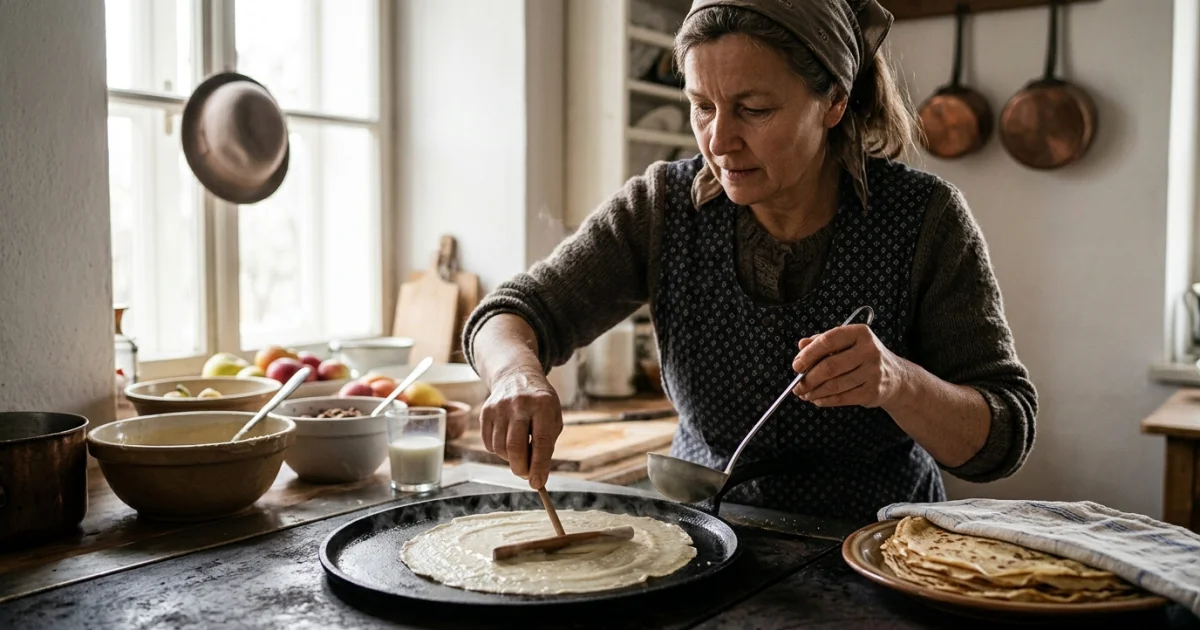
There is a specific sound that unites mornings across Europe, from the wind-swept coasts of Brittany to the quiet, cobblestoned alleys of Krakow. It is the sudden, satisfying hiss of thin batter hitting a hot, buttered surface. I have stood by open café windows in Paris, huddled near the counter of a bustling Viennese coffeehouse, and sat at oilcloth-covered tables in Polish home kitchens, and the sensory memory is always the same: the sweet, caramelized aroma of browning flour, the steam rising from the griddle, and the quiet concentration of the cook.
At their core, the French crêpe, the Central European Palatschinke, and the Polish naleśnik are cousin-dishes. They share a basic DNA of flour, eggs, and milk. Yet, as any local will tell you—often with a finger pointed in gentle warning—they are by no means the same. The way a culture thins its batter, flips its pancake, and chooses its fillings tells a story of geography, trade routes, and domestic survival. To understand the thin pancake is to understand how Europe took a simple peasant canvas and painted its own regional identity upon it.
The French Crêpe: Precision and Brittany’s Slate Griddles
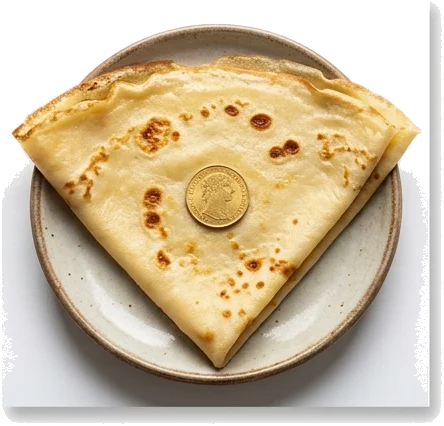
In France, the thin pancake is not merely breakfast; it is a secular religion with its own calendar. Every February, on Candlemas (La Chandeleur), French families flip crêpes while holding a gold coin in their writing hand for good luck. But to trace the origin of this art, we must look to the rugged, rainy peninsula of Brittany.
Historically, Brittany was poor, with soil unsuitable for wheat but perfect for buckwheat, which was brought back from the Crusades. This gave rise to the rustic, savory *galette de sarrasin*—crisp, dark, and earthily fragrant. When white wheat flour became affordable, the sweet, delicate *crêpe* was born.
The Ritual of the Billig
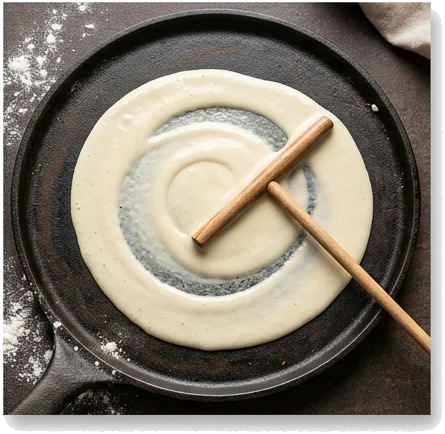
Watching a professional *crêpier* work in a crowded market is like watching a percussionist. They use a heavy, flat cast-iron plate called a *billig*, spreading the liquid batter with a T-shaped wooden tool called a *rozell* in a swift, semi-circular flick of the wrist. The goal is paper-thin translucency with a lacquered, lacy edge. A classic French crêpe is folded into a neat triangle—a pocket designed to hold salted butter and sugar, or perhaps a smear of chestnut cream, allowing the flavor of the toasted batter itself to remain the star of the show. To experience more of this vibrant culinary theater, one must explore the bustling European food markets.
Palatschinken: The Imperial Scroll of Central Europe
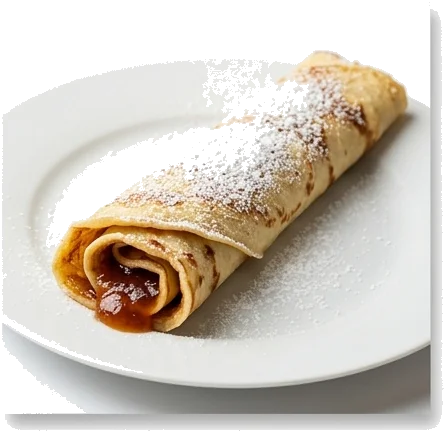
Travel east from Alsace, across the Alps, and the pancake changes its name, its texture, and its posture. In Vienna, Budapest, and Prague, you will find the *Palatschinke* (plural: *Palatschinken*). The word itself is a linguistic fossil, tracing its journey from the ancient Roman flatbread *placenta*, through the Romanian *plăcintă*, into Hungarian (*palacsinta*), and finally arriving at the imperial tables of the Habsburgs.
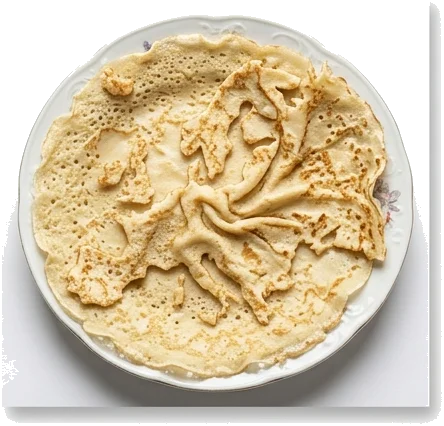
Unlike the French crêpe, which prides itself on paper-thin fragility, a Palatschinke has a slightly more robust constitution. The batter often contains a touch more egg, yielding a pancake that is velvety, soft, and slightly spongy. It is never folded into a triangle. Instead, it is rolled tightly into a cylinder, resembling a sweet scroll.
The Jam and the Coffeehouse
In a traditional Viennese café, a plate of Palatschinken is a slow-lunch staple, served warm with a dusting of powdered sugar. The classic filling is apricot jam (*Marillenmarmelade*)—preferably homemade and slightly tart to cut through the richness of the egg. In Hungary, the dish becomes legendary in the form of *Gundel palacsinta*, stuffed with a rich mixture of ground walnuts, raisins, and rum, before being doused in dark chocolate sauce. Here, the pancake is not a street food eaten on the go; it is a sit-down affair, best enjoyed with a black coffee and the rustle of a morning newspaper.
Polish Naleśniki: Comfort in the Heart of the Milk Bar
Further north, in Poland, the thin pancake becomes the *naleśnik* (plural: *naleśniki*). If the French crêpe is about street-side theater and the Palatschinke is about imperial coffeehouse elegance, the naleśnik is about the deep, comforting warmth of domestic life and the history of Poland’s *bar mleczny* (milk bars).
These state-subsidized cafeterias, which flourished in the post-war era, served simple, dairy-based meals to workers. Naleśniki were, and still are, the crown jewel of the milk bar menu. They are thick enough to be hearty, yet thin enough to remain elegant, folded either into rolls or neat handkerchief squares.
The Sweet Cheese Tradition
The defining soul of the Polish naleśnik lies in its classic filling: *twaróg*, a dry, acidic curd cheese (similar to farmer's cheese or quark). The twaróg is mashed with egg yolk, sugar, and a splash of vanilla, spread over the pancake, and folded. But the magic happens in the final step. Unlike its Western cousins, the filled naleśnik is often pan-fried once more in a generous pat of butter until the exterior develops a golden, crispy crust that contrasts beautifully with the warm, creamy cheese inside. It tastes of grandmothers’ kitchens and quiet winter afternoons.
A Quick Guide to Thin Pancake Traditions
- The French Crêpe: Paper-thin, sweet wheat or savory buckwheat (galette), folded into quarters. Elegant, crispy edges, cooked on a large circular griddle.
- The Central European Palatschinke: Soft, egg-forward, rolled into tight cylinders. Traditionally filled with tart apricot jam or walnut cream.
- The Polish Naleśnik: Tender, golden, rolled or folded into squares. Famously filled with sweet farmer's cheese and pan-fried in butter before serving.
The Shared Table
It is easy to get lost in regional arguments about whether a pancake should be rolled or folded, or whether the batter should rest for one hour or three. But sitting at a wooden table, watching the steam rise from a freshly flipped disc of dough, those arguments fade. Whether smeared with Brittany’s salted caramel, Vienna’s apricot jam, or Krakow’s sweet cheese, the thin pancake remains Europe’s ultimate comfort food—a simple, brilliant reminder that the best culinary traditions are those born from the simplest ingredients, kept alive through generations of busy hands and warm stoves.
Leave a Comment