
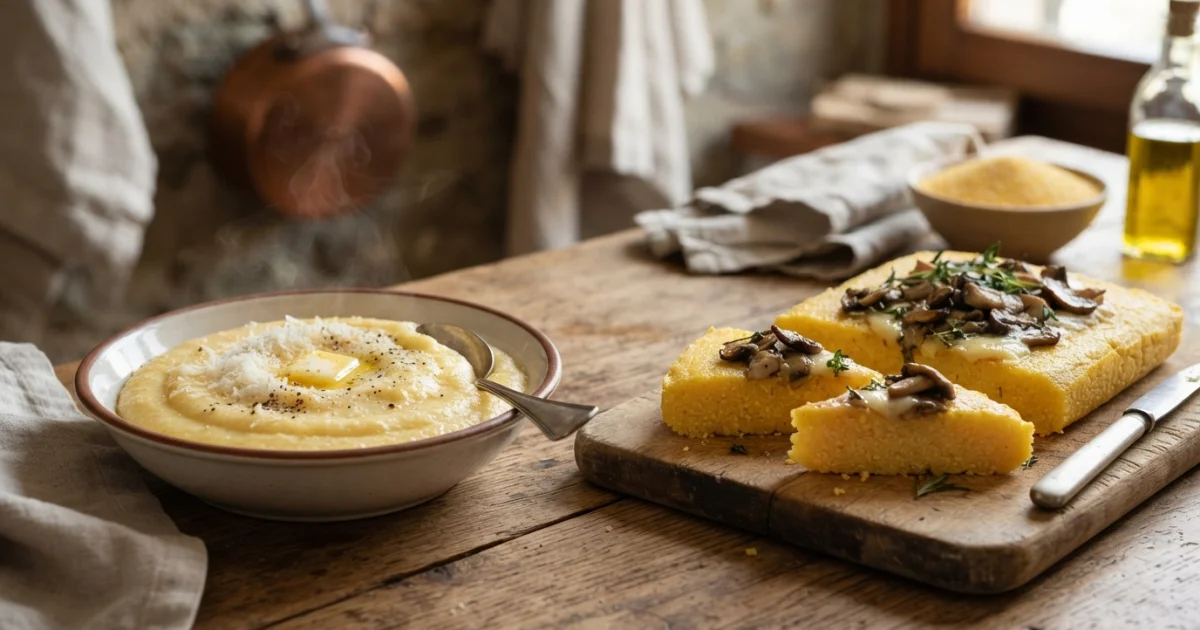
Across the mountain valleys and river plains of Northern Italy—from the alpine chalets of the Valle d’Aosta and Piedmont through the mist-shrouded flatlands of Lombardy and Veneto down into Friuli—polenta is far more than a rustic side dish; it is the historical spine of the northern table. Long before it lands on a wooden trencher in an osteria, polenta is an exercise in pure physics: the progressive hydration of coarsely milled flint corn over persistent, disciplined heat. The divide between a velvety, spoonable porridge and a tight, sliceable slab suitable for searing over glowing embers is not decided by chance or cooking shortcuts. It is dictated strictly by the liquid-to-cornmeal ratio, grain morphology, and starch gelatinization. Once you understand these mechanics, you command both styles with absolute consistency.
Cornmeal Selection: Choosing the Right Grind and Flour
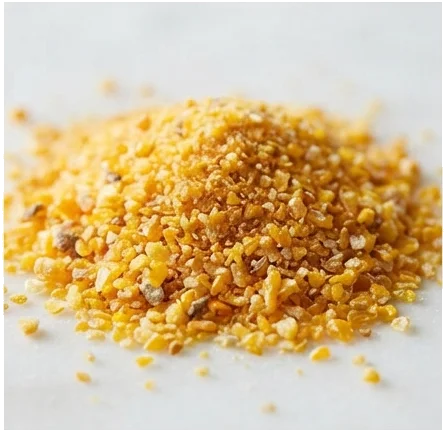
The final texture of your polenta is determined the moment you purchase your grain. In authentic Italian cooking, polenta is made almost exclusively from flint corn (mais vitreo), a varietal prized for its dense, hard endosperm that fractures into sharp, angular grits rather than powdery flour. You must look for medium-to-coarse stone-ground yellow cornmeal, often labeled as bramata. These substantial grains absorb water gradually, swelling over forty to forty-five minutes into tender, suspended spheres that retain distinct tooth and structural integrity.
Conversely, finely ground cornmeal—such as standard American baker's cornmeal or degerminated corn flour—is disastrous for traditional polenta. Its micro-fine particles hydrate immediately, breaking down into a gluey, paste-like starch reminiscent of wallpaper paste rather than porridge. In northern Lombardy, particularly the Valtellina valley, traditions shift toward Polenta Taragna. This regional specialty marries coarse yellow cornmeal with dark, earthy buckwheat flour (grano saraceno), imparting an assertive, nutty mineral profile and a speckled slate-grey color that demands robust mountain accompaniments.
You will frequently encounter boxes marked "instant" or "quick-cooking" polenta in modern supermarkets. These grains have been factory-steamed (precooked) and dehydrated. While they hydrate within five to ten minutes, they do so at the expense of flavor development. The extended simmering of raw, stone-ground grain is essential for breaking down raw starches into complex, sweet sugars and releasing the native corn aromas that characterize a true Italian preparation.
Essential Ratios: Calculating Liquid for Creamy vs. Firm Polenta
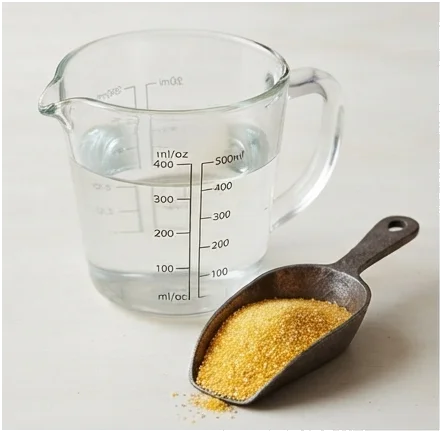
Achieving your desired texture depends entirely on accurate measurement. While nonna might gauge hydration by the resistance against her wooden spoon, reproducible results require working by weight and volume. The baseline formula centers on one liter of liquid:
| Style | Liquid Volume | Cornmeal Weight | Approx. Volume Ratio | Resulting Consistency |
|---|---|---|---|---|
| Soft / Creamy | 1 liter (4.2 cups / 34 fl oz) | 200g (7 oz / ~1.25 cups) | 5:1 to 4.5:1 | Slow-flowing, velvety, spoonable pooling on a warm plate |
| Medium | 1 liter (4.2 cups / 34 fl oz) | 250g (8.8 oz / ~1.5 cups) | 4:1 | Holds soft peaks; classic baseline for mountain stews |
| Firm (Sliceable) | 1 liter (4.2 cups / 34 fl oz) | 300g (10.6 oz / ~1.85 cups) | 3.3:1 to 3:1 | Dense, thick paste that cools into a solid, sliceable block |
The nature of your liquid dictates the overall flavor profile. Water is the purest, most traditional vehicle; it yields a clean, bright, untamed corn flavor that complements rich braises and game without competing for attention. A light chicken or vegetable stock introduces subtle savory depth. If you are preparing a soft polenta intended as an indulgent stand-alone dish, swapping up to one-third of the water for whole milk introduces gentle sweetness and lactic richness, though excessive dairy can scorch easily during a long simmer.
The Science of Lump-Free Polenta: Traditional Whisking vs. Cold-Start Method
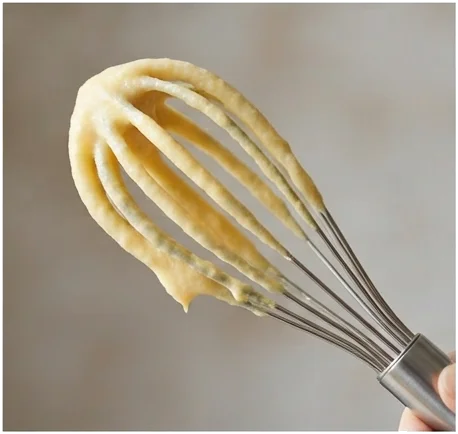
Lumps in polenta are the byproduct of thermal shock. When dry cornmeal hits boiling liquid, the starch on the outer surface of the grain cluster gelatinizes instantly, forming a sticky, waterproof shell around a dry, powdery core. Once these clumps set, mechanical breaking with a spoon becomes extraordinarily difficult. To avoid this, Italian home kitchens rely on two proven methods.
The Traditional Boiling Rain Method: Bring your liquid to an active rolling boil in a deep, heavy saucepan and season it generously with coarse sea salt. Reduce the heat slightly to avoid severe bubbling. Grasp a balloon whisk in your dominant hand and the bowl of cornmeal in the other. Pour the meal into the center of the pot in a whisper-thin, continuous stream—a literal rain of grain—whisking vigorously and uninterruptedly throughout. The constant agitation disperses individual grains across the water column before their exterior starches can fuse together.
The Cold-Start Method: This contemporary approach virtually eliminates the risk of clumping. Combine the cold or lukewarm liquid, salt, and raw cornmeal directly in the pot before applying heat. Whisk thoroughly until the grains are completely dispersed in suspension. Place the pot over medium heat and bring it slowly to a simmer, whisking intermittently. Because the temperature rises uniformly, the starches swell gradually without building impenetrable gelatinized barriers.
Whichever method you choose, put away the wire whisk the moment the mixture thickens into a sputtering suspension (around the 3- to 5-minute mark). Switch immediately to a heavy, long-handled wooden spoon to navigate the dense phase that follows.
Mastering Creamy Polenta: Low-and-Slow Simmering and Mantecatura
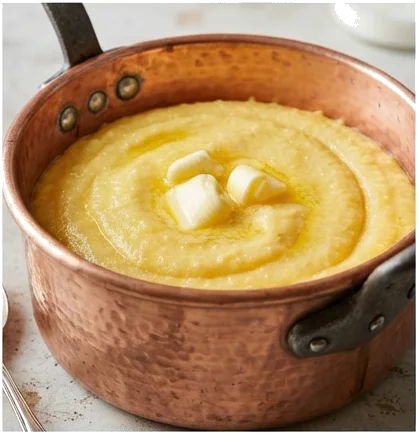
Once thickened, reduce the heat to low. The polenta must be kept at a steady, rhythmic simmer, producing deep volcanic eruptions—what Italian cooks call the sbuffo or heavy "plop." Take precautions: hot polenta blisters bare skin easily, so keep the burner regulated.
Traditionally, this process takes place in a paiolo—an unlined, heavy-gauge copper cauldron with flared sides that diffuses heat evenly, preventing scorching. In a modern kitchen, a heavy-bottomed enameled cast-iron Dutch oven or clad stainless steel pot performs admirably. Cook the polenta for 40 to 45 minutes, scraping the bottom and corners every three to four minutes with your wooden spoon to prevent a crust from catching and burning.
To verify doneness, taste a small spoonful. The grains must be tender and yielding throughout, with no raw starchy bite or chalky resistance. In the pan, the mass will begin to pull away cleanly from the edges as you stir. Now comes the defining step: the mantecatura. Remove the pot completely from the heat source. Add cold, cubed unsalted butter (roughly 40 to 50 grams / 3 to 4 tablespoons) and freshly grated Parmigiano-Reggiano or Grana Padano. Beat the mixture vigorously with your wooden spoon. The thermal shock of the cold fat hitting the hot starches creates an emulsion, transforming a humble porridge into a glossy, velvety suspension.
Note: Avoid pre-shredded bagged cheese entirely; the added cellulose and anti-caking agents prevent smooth melting and produce a greasy, broken finish.
Regional Variation: Polenta Concia (Mountain Style)
In the high valleys of the Alps, polenta sheds its role as a background starch to become a decadent, cheese-laden centerpiece known as Polenta Concia (dialect for "enriched" or "greasy" polenta). Roughly ten minutes before the grain completes its forty-minute cook, generous amounts of alpine cheese and melted butter are folded directly into the bubbling mass.
- Valle d’Aosta: Layered with copious amounts of rich, grassy Fontina DOP and bubbling browned butter.
- Valtellina (Lombardy): Folded with Bitto or Casera cheese, often over a base of buckwheat Taragna.
- Friuli: Finished with aged Montasio, developing deep, nutty, and savory notes.
- Lombardy Plains: Stirred with creamy Gorgonzola Dolce, yielding an intensely aromatic, melting consistency.
- Alto Adige: Often augmented with crisp, pan-rendered speck and sweet translucent onions folded in just before dishing up.
Mastering Firm Polenta: Setting, Slicing, Grilling, and Pan-Frying
Firm polenta requires precise moisture control. Utilizing the 300g per 1 liter ratio, cook the cornmeal over medium-low heat for 40 to 45 minutes. Because the hydration level is lower, the mixture will become exceptionally thick, muscular, and resistant to stirring. You know it has finished cooking when the mass pulls away cleanly from the perimeter of the pot in a single, cohesive body.
- Molding: Immediately turn the molten mass out into a rimmed baking sheet, rectangular cake pan, or gratin dish lightly greased with olive oil or lined with parchment paper. Aim for a depth between 1/2 inch and 3/4 inch (1.2 to 2 cm).
- Smoothing: Work quickly before the starches cool. Smooth the surface flat using an offset spatula lightly moistened with cold water to prevent sticking.
- Setting: Allow the polenta to cool completely at room temperature for one hour. Transfer it to the refrigerator uncovered for at least 1 to 2 hours (or overnight). As the starches retrograde, the sheet will set into a rigid, fully sliceable foundation.
- Portioning: Invert the chilled polenta onto a clean cutting board. Using a long, sharp chef’s knife wiped with a damp cloth between strokes, cut the slab into squares, batons, or clean rustic triangles.
To Pan-Fry: Heat two tablespoons of extra-virgin olive oil or clarified butter in a heavy cast-iron skillet over medium heat. Arrange the cold polenta slices in the pan without crowding. Cook undisturbed for 4 to 6 minutes per side. Resist the temptation to move them prematurely; the cornmeal needs time to build a blistered, crisp golden crust that releases naturally from the pan. The interior will remain tender and hot.
To Grill: Generously brush each slice with olive oil and preheat a cast-iron grill pan or outdoor charcoal grill to medium-high. Lay the slabs across clean, oiled grates. Grill for 4 to 5 minutes per side until charred, dark grill marks develop and the edges turn crunchy.
Serving and Pairing Traditional Polenta
In northern Italian kitchens, polenta dictates the architecture of the entire meal. Soft, mantecata polenta is classically ladled straight onto large wooden boards or wide, shallow bowls to create a soft, warm bed. It catches the unctuous pan juices of long-braised meats like Milanese Osso Buco, rich beef short rib ragù, or slow-simmered wild boar. It is equally harmonious paired with wild forest mushrooms sautéed in butter with fresh thyme, or sweet pork sausage braised with dark greens. To balance such a rich and savory dinner, traditional northern menus often conclude with classic Italian tiramisu.
Firm, grilled or pan-fried polenta functions as a structured carbohydrate, often standing in for bread. It provides an ideal warm pedestal for appetizers, such as Venetian Baccalà Mantecato (whipped salt cod), a thick slice of warm Taleggio drizzled with chestnut honey, or a simple drape of paper-thin lardo that turns translucent against the hot, toasted corn crust.
Troubleshooting, Storage, and Reheating
- Polenta is seizing up before the grains are cooked: Medium-coarse cornmeal can vary in moisture absorption depending on harvest age. If the polenta turns into an unworkable paste after only 20 minutes, keep a small pot of water or broth simmering alongside your stove. Whisk in half a cup of boiling liquid at a time to slacken the porridge, allowing the starches to continue hydrating. Never add cold liquid, which drops the temperature and shocks the starch.
- Lumps have formed: If minor clumping occurs early, whisk aggressively against the sides of the pot. If stubborn lumps persist past ten minutes, remove the pot from the heat and work through the mixture briefly using a handheld immersion blender to smooth the grain suspension, then return to a low simmer.
- Storage: Firm, chilled slabs store exceptionally well. Wrap them tightly in parchment and store in an airtight container in the refrigerator for up to 4 days.
- Reheating Creamy Polenta: Cold creamy polenta naturally sets into a solid block due to starch retrogradation. To restore its velvety emulsion, do not microwave it. Place the chilled polenta into a saucepan over low heat, add a generous splash of warm milk, water, or broth, and break it apart with a wooden spoon. Whisk steadily as it warms until the liquid incorporates and the texture returns to a smooth, supple consistency. Finish with a small knob of fresh butter to revive its gloss.
Frequently Asked Questions
Can I use instant polenta flour with these same ratios and methods?
No. Instant polenta has been precooked with industrial steam and redried, meaning its starches are already gelatinized. It typically calls for a lower liquid ratio (often around 3:1) and cooks fully within five minutes. stone-ground coarse polenta requires 40 to 45 minutes of slow simmering to develop its rich flavor and authentic texture, whereas instant polenta will turn unpleasantly mushy if subjected to an extended simmer.
Why did my polenta turn out lumpy and gritty?
Lumpiness occurs when cornmeal is dumped into hot water too quickly, causing the outer starches to instantly swell and bind dry grains into sealed clusters. Brittleness or grittiness, on the other hand, indicates undercooked grain; coarse stone-ground cornmeal requires a full 40 to 45 minutes of gentle simmering to fully break down tough cellular walls and hydrate the core of each granule.
How do I reheat leftover creamy polenta without it staying a hard block?
Because cornstarch retrogrades and solidifies as it cools, cold polenta must be rehydrated over low heat. Cut the cold polenta into small chunks, place it in a saucepan over medium-low heat, and pour in roughly 1/4 to 1/2 cup of warm milk or broth. Whisk vigorously as the heat softens the starches, incorporating the new liquid until the polenta returns to a fluid, creamy state.
Can I prepare firm polenta in advance?
Yes, firm polenta is actually best prepared in advance. Pouring the hot polenta into a baking dish and chilling it for several hours—or overnight—gives the amylose starch molecules time to realign and form a solid, rigid gel. This ensures your cut slabs hold their edges cleanly without crumbling when placed onto a screaming-hot grill or into a sizzling frying pan.
Leave a Comment